Lancaster University
Children worldwide get hands-on with computing
Lancaster University is contributing to a global transformation in digital literacy.
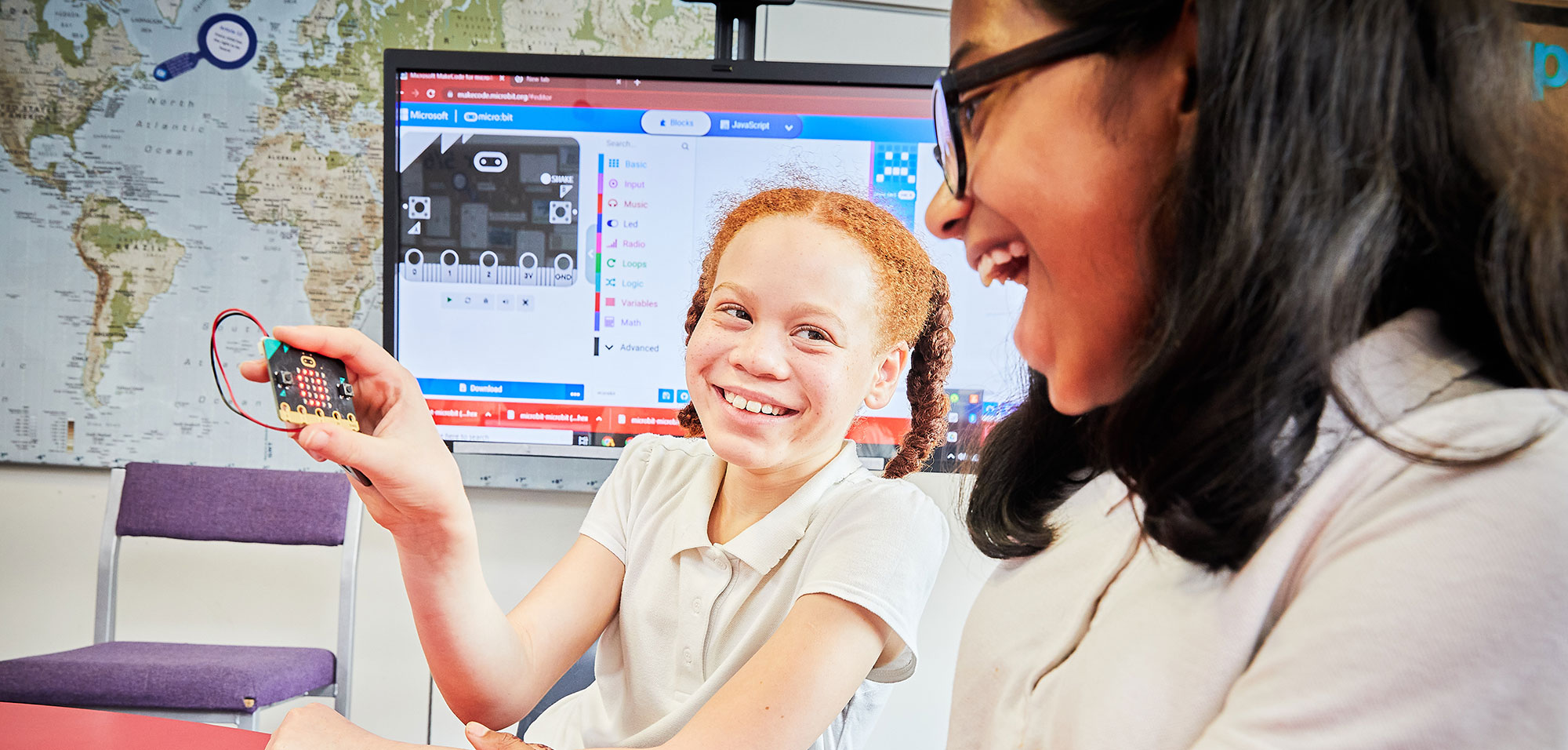
As the sole university partner from the outset, Lancaster plays a pivotal role in the development and success of the micro:bit, a pocket-sized, programmable computer. The micro:bit has empowered an estimated 66 million children worldwide – approximately 2% of all children on the planet – to become technology creators.
From classrooms deep in the Amazon rainforest to inner-city schools in Los Angeles County, Lancaster University’s pioneering work developing the operating system, influencing the hardware and shaping the coding experience of the micro:bit has revolutionised digital learning. The micro:bit’s reach extends to 85 countries, with over 11 million devices inspiring young minds to explore coding and problem-solving. This is helping to lay the foundation for an entire generation to develop critical computational thinking skills and explore career paths in technology.
Beyond delivering technical skills, Lancaster’s work has had a profound social impact. The micro:bit plays a key role in increasing diversity in computing, helping to close the persistent gender gap in technology. In the UK, 90% of primary schools now have micro:bits, embedding digital literacy early, before career choices begin to form. The micro:bit has also been adopted at scale by educators in countries including Singapore, Korea, Hong Kong, Australia, Spain, the Western Balkans, Denmark, Norway, Croatia, Uruguay, Brazil, Jamaica and Canada, ensuring digital learning opportunities are accessible to all.